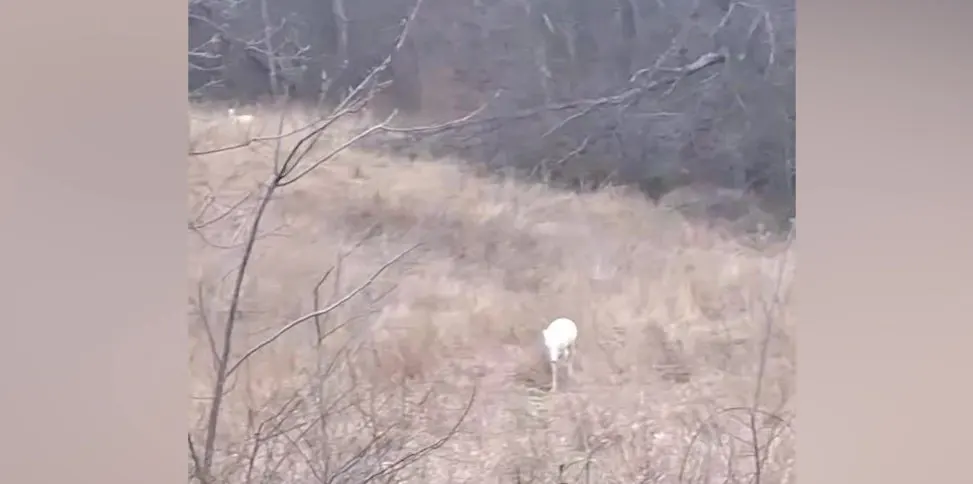
Rare Albino Deer Captivates Family During Unforgettable Encounter
A Wisconsin family experienced a moment of pure wonder when a rare albino deer crossed their path during an evening drive near Lake Geneva. The Petersons spotted the snow-white doe grazing at twilight on October 12, capturing stunning footage of the genetic anomaly that occurs in only 1 out of every 20,000-30,000 deer births.
The Serendipitous Sighting That Went Viral
Emily Peterson, who filmed the encounter, described the deer as “a living snowflake moving through the forest.” Her 22-second video, later shared with local wildlife authorities, shows the animal’s pink eyes glowing in the fading light as it pauses to observe the family’s vehicle before disappearing into the underbrush.
“We’ve lived here 15 years and never seen anything like it,” Peterson told wildlife officials. “It felt like witnessing something magical—the way time seemed to stop while she watched us watching her.”
The Science Behind Albino Deer
True albino deer possess a recessive genetic combination that inhibits melanin production entirely, resulting in:
- Pure white fur year-round
- Pink eyes and nose
- Hooves with reduced pigmentation
Dr. Sarah Jennings, a wildlife geneticist at the University of Wisconsin, explains: “Albino deer inherit two copies of a rare recessive gene—one from each parent. While beautiful, this genetic quirk comes with survival challenges including poor eyesight and increased visibility to predators.”
Conservation Controversy Surrounding White Deer
Some states protect albino deer through special legislation. Wisconsin repealed its albino deer protection law in 2008, sparking ongoing debate among:
- Hunters who view them as legitimate game
- Conservationists advocating protection
- Tourism officials noting their economic value
“From a biological standpoint, protecting albino deer contradicts natural selection principles,” argues Department of Natural Resources biologist Mark Reynolds. “However, we recognize their cultural significance to many communities.”
Ecological Impact and Survival Rates
Research suggests albino deer face significant survival disadvantages:
- 43% higher predation rates in first year (University of Georgia study)
- 60% shorter average lifespan than typical white-tailed deer
- Increased susceptibility to UV radiation and eye problems
Despite these challenges, the Peterson family’s encounter demonstrates these rare creatures can thrive. “She appeared healthy and well-adapted,” noted local wildlife photographer Derek Simmons, who later documented tracks suggesting the doe has survived at least three winters.
Cultural Significance Through History
Albino deer hold special meaning in various traditions:
- Native American lore considers them spiritual messengers
- European legends associate them with forest deities
- Modern conservation movements use them as symbols for biodiversity
“These animals captivate us because they represent nature’s capacity for wonder,” explains cultural anthropologist Dr. Lisa Yang. “In an era of climate change and habitat loss, such encounters remind people why wilderness matters.”
How to Responsibly Observe Rare Wildlife
Wildlife experts recommend these guidelines for ethical viewing:
- Maintain at least 50 yards distance
- Never feed or attempt to touch
- Use zoom lenses rather than approaching
- Report sightings to local conservation authorities
The Wisconsin DNR has created an albino deer sighting database to track population trends. “Public reports help us understand how these genetic anomalies persist in modern ecosystems,” says research coordinator Amanda Wright.
The Future of Genetic Anomalies in Wildlife
As habitat fragmentation increases, scientists predict more frequent sightings of leucistic (partial albino) and albino animals due to:
- Smaller gene pools in isolated populations
- Potential climate-related genetic mutations
- Increased human encroachment into wild spaces
The Peterson family’s experience underscores nature’s enduring capacity to astonish. “We’ll always remember that moment,” Emily reflects. “It changed how our kids see the woods—not just as trees and trails, but as a place where magic might walk out at any moment.”
For those inspired by this story, the National Wildlife Federation offers resources on ethical wildlife observation and habitat preservation. Responsible ecotourism helps ensure future generations might also experience such wonder.
See more BBC Travel World


