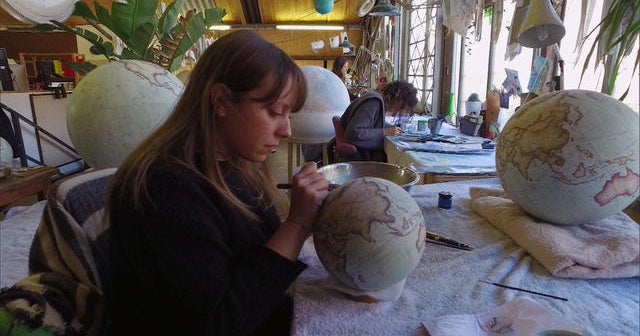
Crafting Celestial Wonders: The Intricate Art of Globe-Making
In an age dominated by digital maps and satellite imagery, the art of globe-making stands as a testament to human creativity and our enduring fascination with the Earth. This craft, which marries artistry with geography, has evolved significantly over the centuries, reflecting not only advancements in technology but also shifts in our understanding of the world.
Historical Context: The Roots of Globe-Making
Globe-making can be traced back to ancient civilizations, where early models of the Earth were often constructed from wood, metal, or clay. The oldest known globe, the Eratosthenes Globe, dates back to 150 BC and was crafted by the Greek scholar Eratosthenes, who calculated the Earth’s circumference with remarkable precision.
During the Renaissance, globes began to take on a new significance. The invention of the printing press allowed for the mass production of maps and globes, making geographical knowledge more accessible than ever. Artisans such as Martin Waldseemüller and Gerardus Mercator emerged, creating stunning globes that were not only functional but also works of art. Their contributions laid the foundation for modern globe-making.
The Craftsmanship Behind Globe-Making
The process of crafting a globe is an intricate dance of artistry and science. Each globe begins with a carefully constructed framework, typically made from materials like wood, metal, or plastic. The globe’s surface is then covered with a printed map, which must be meticulously aligned to ensure accuracy.
One of the most critical aspects of globe-making is the projection used to represent the Earth’s surface. Different projections can distort size, shape, or distance, and choosing the right one is essential for creating an accurate globe. For instance, the Mercator projection, while popular for navigation, significantly enlarges areas near the poles.
Materials and Techniques
- Wood: Traditionally used for its durability and aesthetic appeal, wooden globes require skilled craftsmanship to carve and finish.
- Paper and Plastic: Modern globes often utilize printed paper and molded plastic, allowing for vibrant colors and intricate details.
- Digital Technology: Innovations in 3D printing and digital mapping have revolutionized the globe-making process, enabling greater accuracy and customization.
Modern Innovations in Globe-Making
Today, globe-making has embraced modern technology while retaining traditional craftsmanship. The advent of 3D printing has enabled artisans to create highly detailed and customizable globes, allowing for the incorporation of unique features such as topographical details and even geographical data overlays.
In addition, the integration of augmented reality (AR) has transformed how we interact with globes. Some modern globes come equipped with AR capabilities, allowing users to explore geographical information through their smartphones or tablets. This blend of physical and digital experiences enriches our understanding of geography and enhances educational opportunities.
The Cultural Significance of Globes
Globes serve not only as educational tools but also as cultural artifacts. They reflect the historical context in which they were made, capturing the geographical knowledge and artistic styles of their time. For instance, globes from the Age of Exploration often showcase the colonial mindset, with territories marked according to European claims rather than indigenous realities.
Moreover, globes have become symbols of curiosity and exploration, inspiring generations to seek knowledge about the world. In homes, classrooms, and museums, they stand as reminders of our shared planet, fostering a sense of global citizenship.
Challenges and Future of Globe-Making
Despite the advances in technology and materials, globe-making faces several challenges. The rapid digitization of information has led to a decline in demand for traditional globes, as many individuals turn to smartphones and computers for navigation and geographical information.
However, there remains a dedicated community of artisans and globe enthusiasts who value the tactile experience and aesthetic beauty of handcrafted globes. As environmental concerns grow, sustainable practices in globe-making are also gaining traction, with artisans seeking eco-friendly materials and production methods.
Conclusion: The Enduring Allure of Globes
As we navigate an increasingly digital world, the art of globe-making continues to captivate and inspire. These celestial wonders encapsulate our evolving understanding of the Earth and our place within it. Whether as educational tools, decorative pieces, or cultural artifacts, globes remind us of the beauty and complexity of our planet, ensuring that this craft remains a vital part of our cultural heritage for generations to come.
See more BBC Travel World


