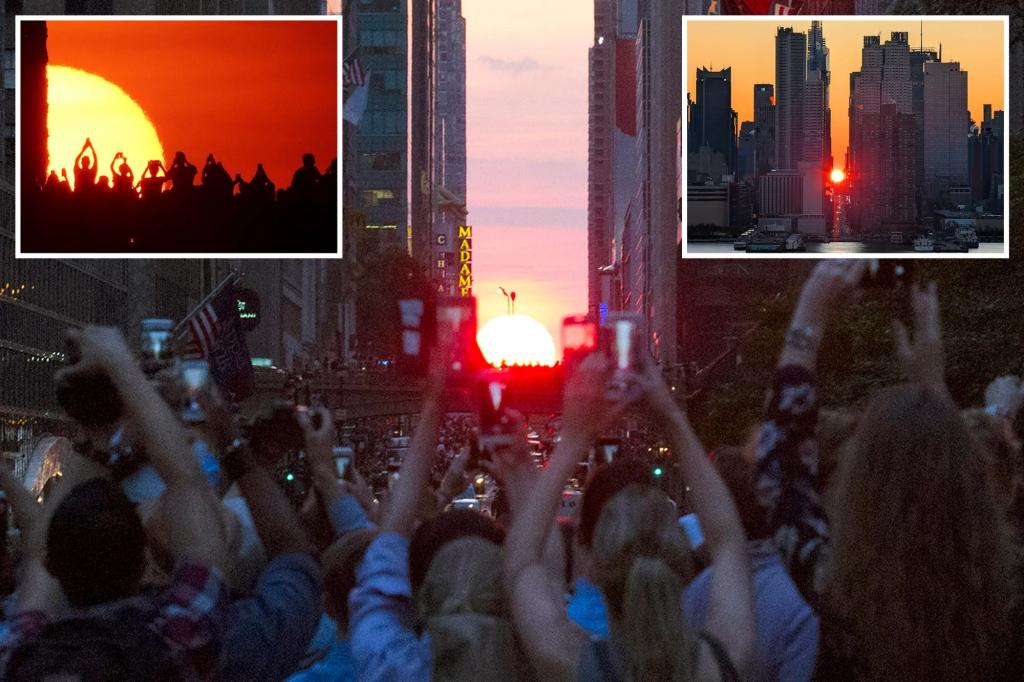
Experience the Celestial Spectacle: Manhattanhenge Lights Up NYC This Month
New York City’s skyline will transform into a golden masterpiece this month as the sun aligns perfectly with Manhattan’s street grid, creating the breathtaking phenomenon known as Manhattanhenge. On select evenings in May and July, the setting sun illuminates the urban canyon between skyscrapers, offering a dazzling visual spectacle. Locals and tourists alike flock to key vantage points to capture this rare celestial event, which occurs only four times a year.
The Science Behind Manhattanhenge
Manhattanhenge, a term coined by astrophysicist Neil deGrasse Tyson in 2002, mirrors the alignment of England’s Stonehenge with the sun during solstices. The event occurs when the sun sets in perfect alignment with Manhattan’s east-west streets, flooding the grid with radiant light. According to the American Museum of Natural History, the phenomenon happens around May 28–29 and July 11–12 each year, with the latter dates offering the most striking views.
Dr. Jackie Faherty, an astronomer at the museum, explains: “Manhattanhenge is a testament to urban planning meeting celestial mechanics. The city’s grid, laid out in 1811, unintentionally created this natural wonder. It’s a reminder of how architecture can harmonize with nature.”
Best Locations to Witness Manhattanhenge
To experience the full effect, spectators should position themselves along major cross streets with unobstructed views westward. Popular spots include:
- 42nd Street: Offers iconic views framed by landmarks like the Chrysler Building.
- 34th Street: Provides a dramatic perspective with the Empire State Building in the foreground.
- Tudor City Overpass: A less crowded alternative with elevated sightlines.
Photographers recommend arriving at least 30 minutes early to secure a prime location. The optimal viewing window lasts just 15–20 minutes, as the sun dips below the horizon.
Why Manhattanhenge Captivates the Public
The event draws thousands annually, blending science, art, and urban culture. Social media platforms explode with vibrant snapshots, while local businesses capitalize on the influx of visitors. A 2023 survey by NYC & Company found that 68% of tourists planned their summer trips around Manhattanhenge dates.
However, not everyone celebrates the spectacle. Some urban planners argue that the grid’s rigidity prioritizes aesthetics over functionality. “While visually stunning, Manhattanhenge highlights the lack of green spaces in midtown,” notes architect Lila Chen. “We should design cities for livability, not just photo ops.”
Tips for Capturing the Perfect Shot
Professional photographers share these techniques for immortalizing Manhattanhenge:
- Use a tripod to stabilize long-exposure shots.
- Set your camera to a high aperture (f/8 or higher) for sharp detail.
- Experiment with silhouettes by positioning people or objects against the sun.
For smartphone users, disabling HDR and tapping to focus on the brightest part of the sky can enhance results.
The Future of Manhattanhenge
As climate change alters atmospheric conditions, some scientists predict shifts in the sun’s alignment over decades. A 2022 study in The Astrophysical Journal suggested that rising temperatures could slightly alter sunset angles by 2050. Meanwhile, proposed skyscrapers may eventually obstruct views, making current vantage points even more precious.
For now, Manhattanhenge remains a free, awe-inspiring event that unites New Yorkers and visitors under a shared sky. Mark your calendars for July’s encore, and join the crowds in celebrating this urban astronomical marvel.
Call to Action: Share your Manhattanhenge photos with #NYCHenge and tag @NYCGo for a chance to be featured on official tourism channels!
See more BBC Travel World


