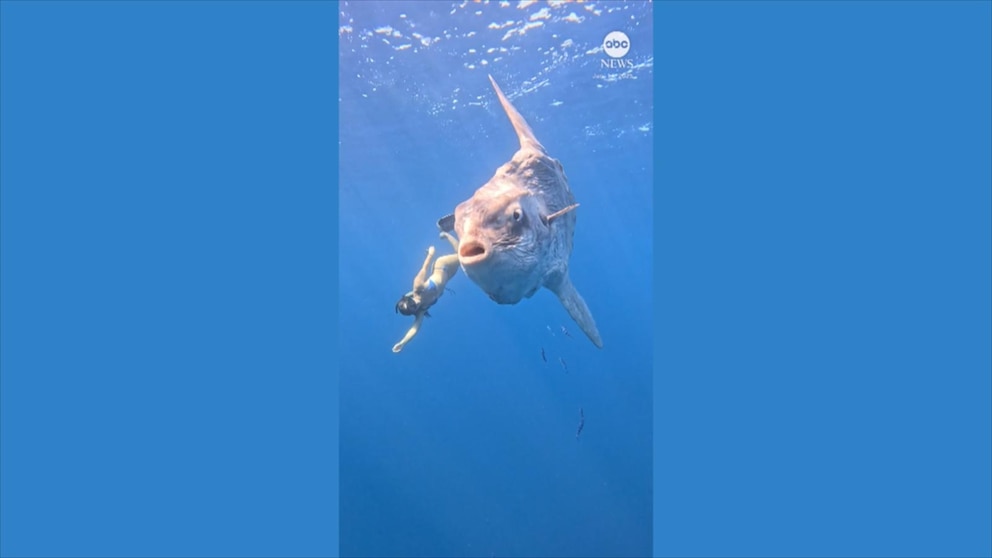
A Close Call Under the Waves: Diver’s Remarkable Encounter with a Massive Sunfish
In a breathtaking underwater moment off the coast of Bali, Indonesia, professional diver Jake Reynolds found himself eye-to-eye with a colossal ocean sunfish (Mola mola) measuring over 8 feet tall. The July 2023 encounter, captured on video, reveals the diver’s initial shock as the 2,000-pound gentle giant glided within inches of him before peacefully continuing its journey through the deep blue. This rare interaction highlights both the majesty of marine megafauna and the urgent need to protect increasingly vulnerable ocean ecosystems.
The Heart-Stopping Moment: A Sunfish Surprise
Reynolds, a 12-year veteran of underwater photography, described the experience as “equal parts terrifying and magical.” The sunfish approached silently from below while Reynolds was documenting coral reefs at 60 feet depth. “One second I’m focusing on a school of butterflyfish, the next I’m staring at what looks like a floating car door with eyes,” he recalled. The diver remained motionless as the massive fish studied him curiously for nearly a minute.
Marine biologists confirm such close encounters remain uncommon despite sunfish populations in tropical and temperate waters worldwide. “Sunfish are naturally curious but usually keep their distance from humans,” explained Dr. Lisa Wong, a marine ecologist at the University of Queensland. “This interaction suggests either increasing habituation to divers or changes in the fish’s foraging behavior due to shifting ocean conditions.”
Understanding the Ocean Sunfish: Biology and Behavior
The ocean sunfish holds several marine records:
- Heaviest known bony fish (up to 5,000 lbs)
- Most prolific egg producer (300 million eggs per spawning)
- Fastest growth rate of any vertebrate (adding 1-2 lbs daily)
Despite their size, sunfish feed primarily on jellyfish and other gelatinous zooplankton. Their unique flattened shape and lack of a true tail make them surprisingly maneuverable. Recent tagging studies reveal they routinely dive over 2,000 feet during daily vertical migrations.
“What many don’t realize is that sunfish play a crucial role in ocean food webs,” noted Dr. Wong. “By consuming jellyfish that would otherwise overpopulate, they help maintain balance in marine ecosystems.”
Conservation Concerns for Marine Giants
While not currently endangered, sunfish face growing threats:
- Bycatch in commercial fisheries (accounting for 30% of some tuna catches)
- Plastic ingestion (mistaking bags for jellyfish)
- Boat strikes (their surface basking makes them vulnerable)
A 2022 study in Nature Conservation found microplastics in 73% of sunfish examined across the Pacific. “These filter feeders are becoming the canaries in the coal mine for ocean health,” warned marine conservationist Miguel Ortega. “When species at the top of the food chain show plastic contamination, it signals systemic problems.”
The Bigger Picture: Marine Tourism and Conservation
The viral video of Reynolds’ encounter has sparked debate about responsible wildlife interactions. While some argue such footage promotes conservation awareness, others worry about increased pressure on marine habitats.
“We’re seeing more divers actively seeking out sunfish encounters,” said Bali dive operator Putu Surya. “Last season, we had to implement new guidelines after multiple boats crowded a single sunfish for hours.” The local government now requires:
- Minimum 10-foot approach distance
- 15-minute maximum observation time
- No flash photography
Researchers emphasize that sustainable ecotourism, when properly managed, can fund conservation efforts. A 2021 Stanford study found that shark diving generates over $314 million annually while promoting protection policies.
What This Encounter Teaches Us
Reynolds’ sunfish meeting represents more than just a viral moment—it underscores our evolving relationship with marine environments. As climate change alters ocean currents and temperatures, unexpected wildlife interactions may become more frequent.
“The takeaway isn’t just that big fish exist,” Reynolds reflected. “It’s that we’re guests in their world. That sunfish chose to interact with me, not the other way around. We need to approach ocean conservation with that same humility.”
For those inspired by such encounters, marine biologists recommend supporting certified conservation organizations and choosing eco-conscious tour operators. As Dr. Wong concludes: “Every sunfish sighting should remind us that protecting oceans isn’t about saving fish—it’s about preserving the complex web of life that sustains our planet.”
Call to Action: Learn how you can support sunfish conservation through the Marine Megafauna Foundation’s adoption program or by reducing single-use plastics in your daily life.
See more BBC Travel World


