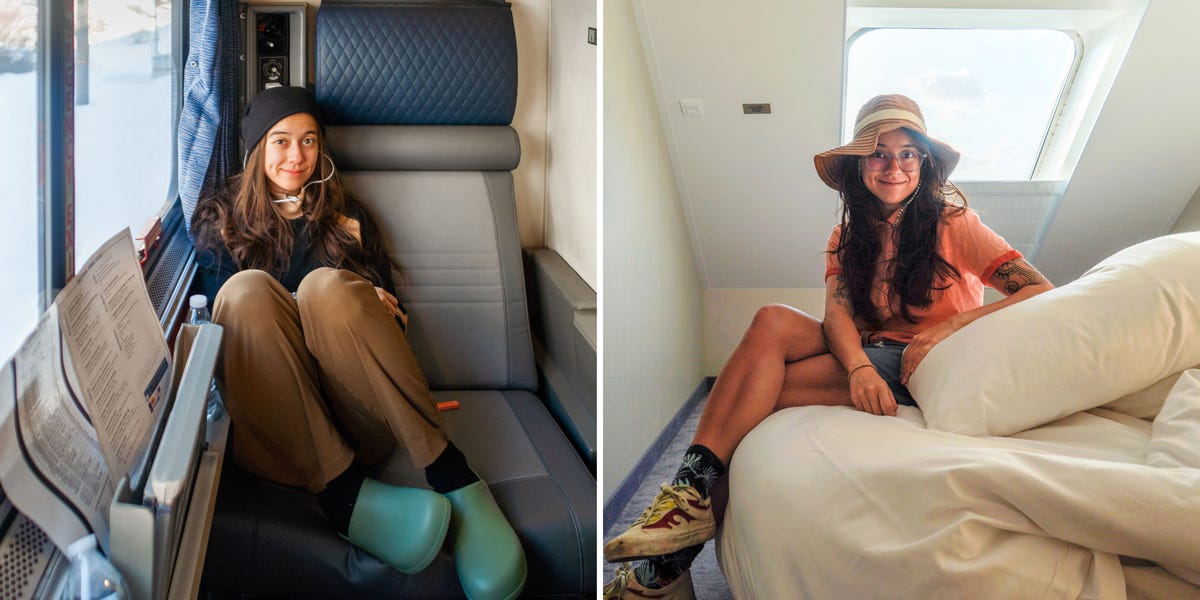
The Journey of Comfort vs. Fulfillment: Trains or Cruises?
After spending 140 hours on overnight trains and 14 nights aboard cruise ships, seasoned traveler Michaela Reynolds weighs the merits of these contrasting modes of transportation. While cruises offer predictable luxury, trains provide raw connection to landscapes and cultures. This first-hand account explores which experience delivers deeper personal fulfillment versus surface-level comfort.
The Allure of Slow Travel by Rail
Reynolds’ 5,800 miles of train travel spanned iconic routes including Canada’s Rocky Mountaineer and Japan’s Shinkansen bullet trains. “There’s an intimacy to rail travel you can’t replicate,” she reflects. “Watching villages flicker past your window, sharing meals with strangers in the dining car – trains force you to engage with the journey itself.”
Statistics support rail’s growing popularity among adventure seekers:
- Amtrak reported a 17% increase in long-distance ridership in 2022
- 82% of millennial travelers prioritize “authentic experiences” over luxury (Condé Nast Traveler)
- The global luxury train market will grow 5.2% annually through 2028 (Grand View Research)
Cruise Ship Comforts: Floating Resorts
In contrast, Reynolds’ cruise experiences offered predictable pampering. “Your biggest decision becomes whether to order the lobster or filet mignon,” she laughs. Modern megaships boast amenities rivaling five-star resorts:
- Royal Caribbean’s Wonder of the Seas carries 18 restaurants and a 10-story slide
- 80% of cruise passengers cite “stress-free vacation” as primary motivation (CLIA)
- The average cruise passenger gains 1-2 pounds per day (Nutrition Journal)
However, travel psychologist Dr. Elena Torres notes: “The curated perfection of cruises can create emotional distance from authentic cultural encounters. You’re experiencing a manufactured version of each destination.”
Measuring Personal Enrichment
Reynolds kept detailed journals assessing each travel mode’s impact:
Cultural Immersion Factor
Train stations placed Reynolds in city centers where she interacted with locals buying groceries or commuting to work. Cruise ports often required expensive excursions to reach meaningful cultural sites. “I met a grandmother teaching me to make pierogi in Poland because I took a local train instead of a shore excursion,” she recalls.
Environmental Considerations
Modern trains emit 75% less CO2 per passenger mile than cruising (International Transport Forum). “Knowing my travel footprint was smaller added to my sense of fulfillment,” Reynolds notes. Cruise lines are making strides though – Carnival Corporation reduced emissions 29% since 2011.
The Future of Experiential Travel
Industry analysts see growing demand for hybrid experiences. “Travelers want the romance of rail with select cruise-style amenities,” says transportation analyst Javier Mendez. New offerings like Belmond’s luxury trains with spa cars or Viking’s expedition cruises with resident historians bridge this gap.
Ultimately, Reynolds concludes: “Trains fed my soul, while cruises rested my body. Now I mix both – taking the Trans-Siberian Railway to reach a small-ship Alaskan cruise.” Her advice? “Match the transportation to your trip’s purpose. Comfort and fulfillment aren’t mutually exclusive if you plan thoughtfully.”
Ready to plan your own journey? Consult our interactive travel style quiz to discover whether trains, cruises, or a combination best suits your wanderlust.
See more BBC Travel World


