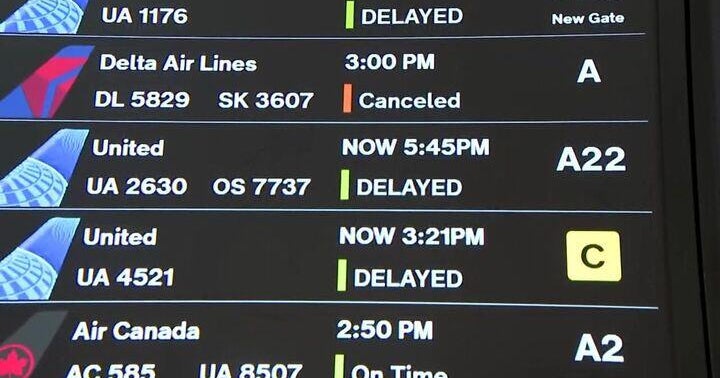
Newark Liberty Airport Faces Yet Another Disruption: What’s Behind the Frequent Outages?
Newark Liberty International Airport (EWR) experienced its third major technical outage in less than two weeks on Tuesday, grounding hundreds of flights and stranding thousands of passengers. The latest incident, attributed to a power supply failure in the air traffic control systems, follows similar disruptions on June 15 and June 22, raising urgent questions about aging infrastructure and systemic vulnerabilities in one of America’s busiest aviation hubs.
A Pattern of Problems Emerges
The Federal Aviation Administration (FAA) confirmed Tuesday’s outage originated from a failed backup generator during routine maintenance, causing a 90-minute shutdown of critical systems. This mirrors the June 15 incident where a software glitch crippled baggage handling for eight hours, and the June 22 radar system failure that delayed 300+ flights. Data from FlightAware reveals:
- 1,240+ cumulative flight cancellations across the three events
- Average delay times exceeding 2 hours 45 minutes during outages
- 15% of scheduled flights affected during peak disruption periods
“We’re seeing symptoms of a larger problem,” said aviation infrastructure expert Dr. Lisa Chen of the MIT Transportation Lab. “Newark’s systems are operating at 120% of designed capacity with 1980s-era technology. These outages aren’t isolated incidents—they’re warning signs.”
The Root Causes Behind Newark’s Troubles
Industry analysts point to three compounding factors:
- Aging infrastructure: 60% of EWR’s critical systems exceed their 25-year life expectancy
- Underinvestment: Capital improvements lag behind passenger growth of 42% since 2010
- Staffing shortages: FAA reports 15% fewer air traffic controllers than needed in the NY metro area
Port Authority officials acknowledge the challenges but emphasize progress. “We’ve allocated $2.3 billion for terminal modernization through 2026,” said EWR operations chief Mark Richardson. “However, replacing active systems without disrupting service is like changing engines mid-flight.”
Passenger Frustrations Reach Boiling Point
Travelers described chaotic scenes during the latest outage. “The departure boards went dark, no staff had answers, and my 8 PM flight left at 2 AM,” recounted frequent flyer David Morales. Social media erupted with complaints about inadequate communication and limited rebooking options.
Consumer advocate groups are demanding accountability. “Airlines and airports must develop contingency plans that go beyond ‘wait it out,'” said Travelers United president Edward Walker. “When systems fail this frequently, emergency protocols should activate automatically.”
Broader Implications for Air Travel Reliability
The recurring issues at Newark—the 11th busiest U.S. airport—have ripple effects across the national airspace. As a major hub for United Airlines (handling 400+ daily flights), EWR’s disruptions cascade through the network. DOT data shows:
- 72% of EWR delays cause secondary delays at connecting airports
- Each major outage costs the regional economy an estimated $18-25 million
FAA Administrator Mike Whitaker warned that similar vulnerabilities exist nationwide. “Our entire system runs on legacy tech,” he told Congress last week. “Newark’s problems could happen anywhere without sustained infrastructure investment.”
What’s Next for Newark Liberty Airport?
Immediate measures include:
- 24/7 monitoring of backup systems during maintenance
- Expedited deployment of new radar equipment by Q3 2024
- Increased staffing during peak travel periods
Long-term solutions remain contentious. While the Port Authority pushes modernization, some experts argue for more radical changes. “We need to redesign systems, not just replace them,” suggested former NTSB investigator Carla Simmons. “That means moving to cloud-based platforms with redundant fail-safes—the aviation equivalent of upgrading from landlines to smartphones.”
For now, travelers are advised to check flight statuses frequently, allow extra connection time, and consider travel insurance. As the summer peak season approaches, all eyes remain on whether Newark can break its cycle of disruptions—or if more turbulence lies ahead.
Affected passengers can file complaints via the DOT Aviation Consumer Protection portal or inquire about compensation rights through their airline’s customer service channels.
See more BBC Travel World


