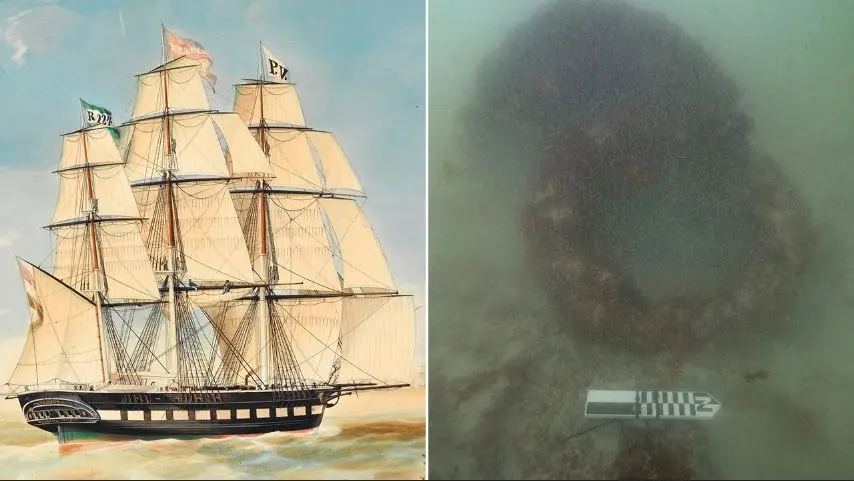
Unearthing the Past: The Remarkable Discovery of an 800-Ton Shipwreck
After 120 years lost beneath the waves, the wreckage of an 800-ton steamship has been discovered off the coast of Newfoundland, Canada. Marine archaeologists located the vessel using advanced sonar technology, solving a long-standing maritime mystery. The ship, identified as the SS Atlas, vanished in 1903 during a routine cargo run, claiming all 32 crew members. Researchers believe this find could rewrite chapters of early 20th-century shipping history.
A Century-Old Mystery Solved
The SS Atlas disappeared on November 17, 1903, while transporting coal from Nova Scotia to New York. Despite extensive searches at the time, no trace of the vessel or its crew was found—until now. The wreck sits 350 feet below the surface, remarkably intact, with its hull and superstructure still recognizable. Initial surveys suggest the ship may have succumbed to a catastrophic boiler explosion, a common hazard for steam-powered vessels of that era.
Dr. Eleanor Whitmore, lead marine archaeologist on the project, explains: “The preservation is extraordinary. We can clearly see the ship’s wheel, cargo hatches, and even personal items like china dishes in the debris field. This gives us an unprecedented window into life aboard a working merchant vessel at the turn of the century.”
Cutting-Edge Technology Behind the Discovery
The breakthrough came through a combination of historical research and modern underwater exploration tools:
- Side-scan sonar: Mapped the seafloor with centimeter-level precision
- ROV (Remotely Operated Vehicle): Captured high-definition video of the wreck
- Magnetometer: Detected the ship’s metal components beneath sediment
Researchers cross-referenced newly discovered shipping lanes from 1902 port records with the sonar data to narrow their search area. The team spent 18 months analyzing data before confirming the identity of the wreck through distinctive features like the ship’s unique propeller design and hull dimensions.
What the Shipwreck Reveals About Maritime History
The SS Atlas represents a pivotal transition period in naval architecture. Built in 1898, the vessel combined traditional sail rigging with steam power—a common but short-lived design as ships moved toward full mechanization. Marine historian Professor James Callahan notes: “This wreck is a time capsule. It captures the moment when global trade was exploding, and shipbuilders were experimenting with hybrid technologies to meet demand.”
Key findings from the initial survey include:
- Evidence of reinforced bulkheads, showing early safety innovations
- Remnants of both coal bunkers and sail storage areas
- A cargo manifest preserved in the captain’s quarters
Controversies and Competing Theories
While the boiler explosion theory remains prominent, some researchers propose alternative explanations for the sinking. Captain Miguel Fernandez, a retired salvage expert, suggests: “The damage pattern could indicate a collision with an iceberg. This route had significant ice risk in November, and the hull shows deformation consistent with such an impact.”
Meanwhile, local folklore tells of the SS Atlas carrying a secret gold shipment—a claim researchers have yet to verify. The discovery team plans to conduct controlled excavations next summer to investigate these theories while preserving the site’s integrity.
Next Steps for Research and Preservation
The Canadian government has designated the wreck as a protected archaeological site. Researchers will create a 3D photogrammetry model of the entire vessel before disturbing any artifacts. This digital preservation ensures future study opportunities while minimizing physical intervention.
Key priorities for the coming years include:
- Documenting and conserving recovered artifacts
- Tracking environmental impacts on the wreck site
- Researching descendants of the crew for DNA identification
Dr. Whitmore emphasizes the human dimension: “Beyond the historical significance, we have a responsibility to the 32 souls lost. Their stories deserve to be told completely and respectfully.” The team plans to erect a memorial plaque at the nearest coastal town once research concludes.
Implications for Modern Maritime Safety
This discovery comes as shipping companies face new challenges with climate change altering sea routes. The SS Atlas‘s fate underscores enduring lessons about:
- The importance of redundant safety systems
- Accurate weather forecasting
- Crew training for emergency scenarios
As Professor Callahan reflects: “Every wreck teaches us something. The Atlas reminds us that technological progress must always be matched by operational wisdom—a lesson as relevant today as in 1903.”
For those interested in following this historic discovery, the research team will publish regular updates on the Maritime Museum of the Atlantic’s website. Public lectures and a documentary film are also in development to share these findings with wider audiences.
See more BBC Travel World


